
Basler Taube (Basel Dove)
Eine der schönsten Briefmarken der Welt und ein Pionierwerk des Farbdrucks. Die 1845 im Schweizer Kanton Basel herausgegebene Marke war die erste dreifarbige Briefmarke der Welt.
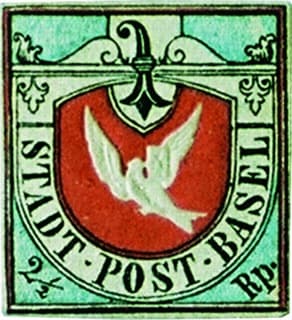
Schweiz (Kanton Basel) · 1845
Basler Taube (Basel Dove)
Überblick
Die Basler Taube ist ein Meisterwerk der frühen Druckgrafik und ein Meilenstein der Postgeschichte. Sie wurde am 1. Juli 1845 im Schweizer Kanton Basel ausgegeben. Sie war die erste dreifarbige Briefmarke der Welt – gedruckt in Schwarz, Blau und Karminrot, gekrönt von einer geprägten, erhabenen weißen Taube. Hergestellt wurde sie von der Firma Wilhelm Haas & Söhne in Basel. Da das Zusammenspiel der Farben und der Prägung extreme Präzision verlangte, gilt sie als technisches Wunderwerk ihrer Zeit. Zwar ist die Basler Taube nicht so selten wie andere Klassiker, aber aufgrund ihrer Ästhetik und des erhabenen Reliefs gehört sie zu den beliebtesten Sammlerstücken weltweit.
Design & Technische Details
Geprägte, weiße Taube, die einen Brief im Schnabel trägt, auf blauem Grund. Umrahmt von einem roten Wappenschild mit dem Text 'STADT POST BASEL'. Unten der Wert '2½ Rp.'. Dreifarbig und reliefgeprägt. Ungezähnt.
Historische Fakten
- Ausgegeben am 1. Juli 1845 als Stadtpostmarke für Basel
- Die weltweit erste Briefmarke im Mehrfarbendruck
- Entworfen und gedruckt von Wilhelm Haas & Söhne in Basel
- Erforderte zwei Druckdurchgänge und einen separaten Prägedurchgang
- Außer Kurs gesetzt nach Einführung des Schweizer Bundespostwesens im Jahr 1849
Wie man diese Briefmarke identifiziert
Wenn Sie glauben, eine Basler Taube (Basel Dove) gefunden zu haben, finden Sie hier die wichtigsten Erkennungsmerkmale:
- Die weiße Taube in der Mitte muss spürbar geprägt (erhaben) sein
- Klare Trennung der drei Farben Blau, Karminrot und Schwarz
- Ungezähnt – echte Stücke weisen oft kleine Ränder auf
- Vorsicht vor flachen Nachdrucken oder Fälschungen ohne echtes Relief
Häufig gestellte Fragen
Was macht die Basler Taube so besonders?
Sie ist die erste mehrfarbige Briefmarke der Weltgeschichte und fasziniert Sammler durch ihre plastische Blindprägung der weißen Taube.
Wie viel ist eine Basler Taube wert?
Gestempelte Marken kosten je nach Qualität zwischen 3.000 und 20.000 Dollar. Ungebrauchte Exemplare in hervorragender Erhaltung erzielen 15.000 bis über 40.000 Dollar.